What are the different types of cryptocurrency wallets?
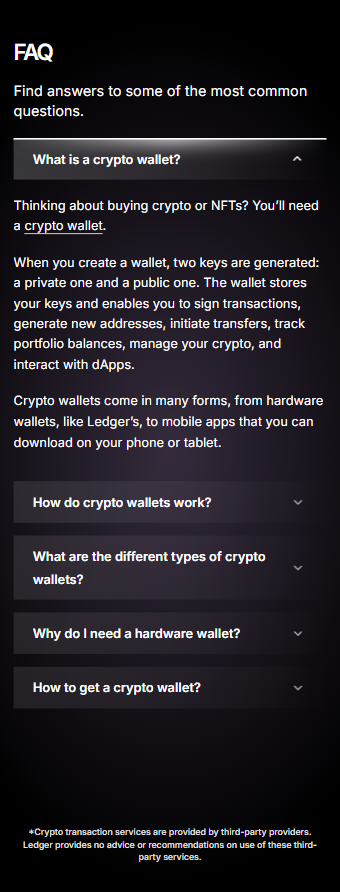
There are different types of cryptocurrency wallets, each with its own advantages and disadvantages.Hot wallets are connected to the internet and are generally convenient to use, but they are also vulnerable to online attacks. Examples include web, mobile, and desktop wallets. Cold wallets keep private keys offline and safe from online threats. Examples include paper and hardware wallets.Wallets can also be classified as custodial or non-custodial, depending on who owns the private keys. Storing your cryptocurrency in a custodial wallet means a third party controls your private keys and, therefore, your assets. In contrast, non-custodial wallets, like Ledger, allow you to fully own and control your cryptocurrency.
Why do I need a hardware wallet?
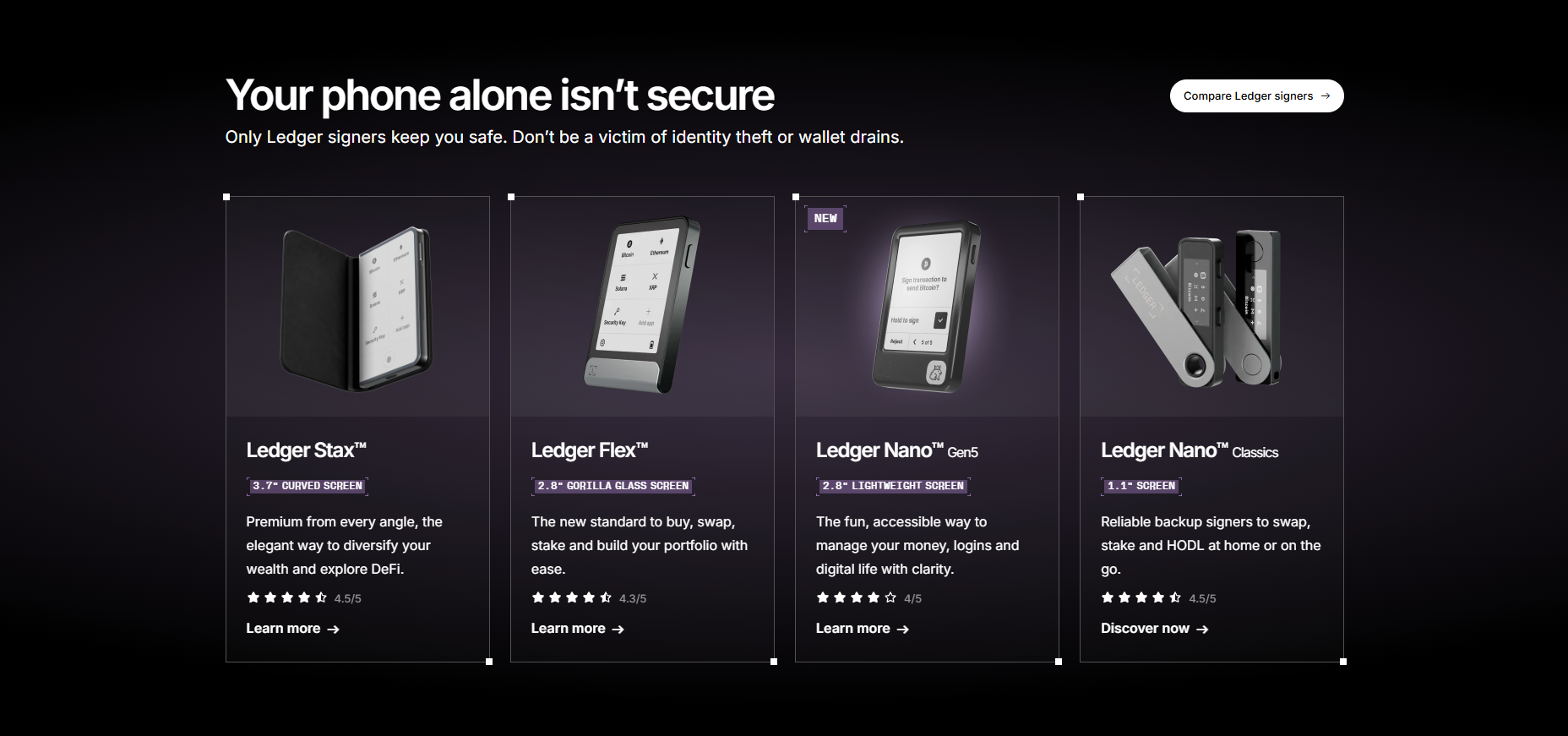
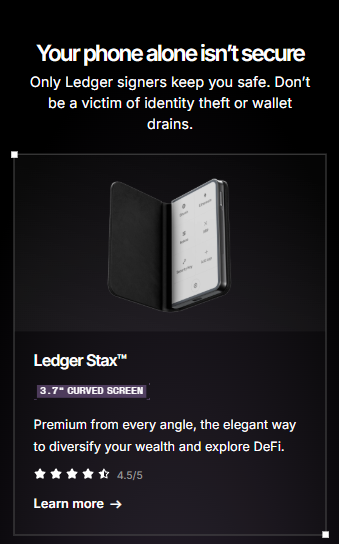
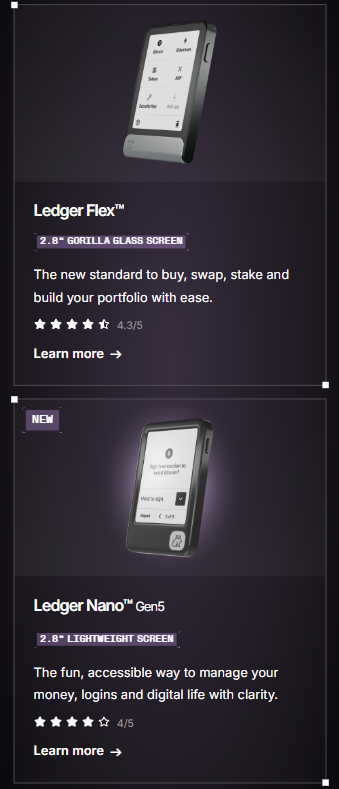
Hot wallets store private keys on internet-connected systems, making them vulnerable to online attacks. Storing your cryptocurrencies on an exchange also means you don't have real ownership or control over them. If the exchange goes bankrupt or stops accepting withdrawals, you lose access to your funds.Hardware wallets, on the other hand, store your private keys offline, offering full control and greater security. Even if you lose your hardware wallet, you can purchase a new one and use your recovery password to access your assets.